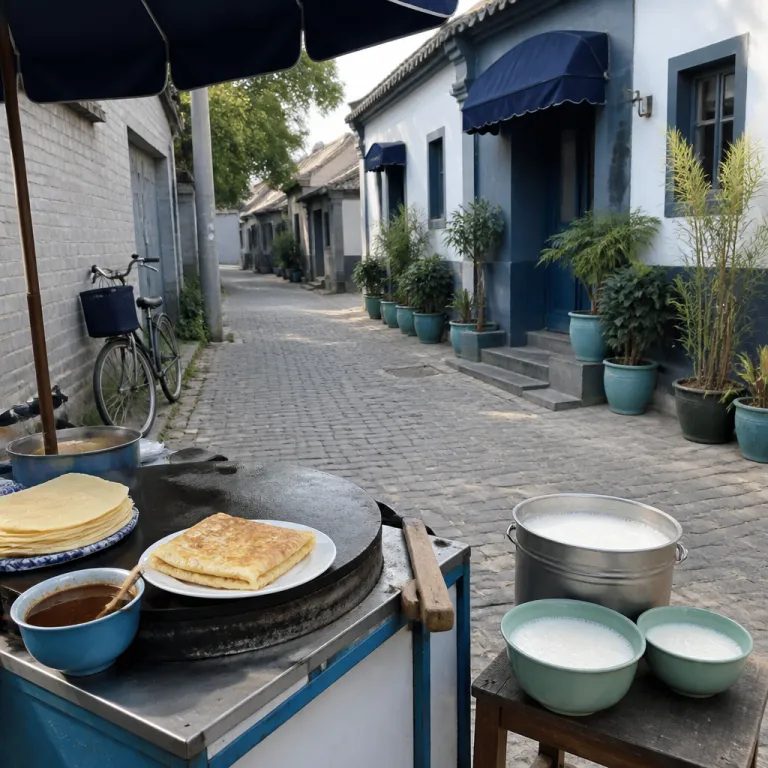
The Beijing breakfast local food guide for luxury travelers
Beijing wakes early, and breakfast shapes how the city feels. This Beijing morning food guide is written for travelers who usually head straight to the hotel buffet yet sense that the real story is unfolding on the street. Think of it as a quiet upgrade to your stay in China, where the first decision of the day is not which spa treatment to book, but where to eat in Beijing before the crowds arrive.
The classic Beijing morning canon starts with jianbing, a savory egg crepe cooked on large circular griddles by street vendors who begin working from around 5:00. A thin batter hits the hot plate, an egg is spread, herbs and bean-paste-based sauces are brushed on, then a crisp cracker is folded inside to create one of the city’s most satisfying street food dishes. Local couples often share one jianbing between them on their way from their hotel to the subway, then grab soy milk or douzhir as a second stop on their informal breakfast tour.
Douzhir, the fermented mung bean drink, is the most traditional Beijing-style morning beverage and the one that divides opinion fastest. Local food writers describe it simply and accurately: “What does douzhir taste like? Sour and slightly pungent, an acquired taste.” Order it once, sip slowly, and decide whether it becomes part of your own Beijing breakfast ritual or remains a one-time experiment. Either way, tasting douzhir alongside fried dough sticks and steamed baozi connects you directly to traditional Beijing habits that predate every luxury hotel in the city.
The Beijing breakfast canon: from jianbing to dough sticks
To understand this Beijing breakfast guide for visitors, start with the sounds of early streets. Metal spatulas on griddles, the hiss of soy milk being poured, and the low murmur of office workers queuing for their favorite breakfast dishes create a rhythm that no hotel lobby can imitate. These are the best moments of the day to feel how local life in Beijing actually moves.
Jianbing remains the anchor, but it is rarely eaten alone in Beijing. Many stalls sell it beside baskets of baozi, steamed buns filled with pork, lamb or vegetables, and trays of fried dough sticks that locals tear and dip into warm soy milk for a traditional breakfast pairing. Typical prices stay modest, with a generous jianbing often costing around 8–12 RMB in central districts, which means even guests at the most premium hotel can enjoy Beijing street food every morning without denting a luxury budget.
Alongside jianbing, you will see noodles such as zhajiangmian, often written as zha jiang mian or jiang mian on bilingual menus, served surprisingly early in the day. These wheat noodles are coated in a thick bean paste sauce that defines traditional Beijing flavor, and they work as well at 7:00 as they do at lunch time. For couples who like a savory start, sharing one bowl of zhajiangmian plus a plate of lamb skewers from a nearby grill stand turns a simple Beijing breakfast into a full street food feast.
Street food versus hotel breakfast: how to balance both
Luxury travelers often ask whether they should skip their hotel breakfast entirely to chase street food. The honest answer in this Beijing breakfast local food guide is that the best stays in China let you enjoy both, using the hotel for comfort and the street for connection. Think of the hotel buffet as your safety net and the streets as your morning adventure, not a binary choice between good and bad options.
High-end properties across the city now curate impressive breakfast spreads that reinterpret traditional Beijing dishes. You will find carefully plated jianbing, steamed buns filled with refined lamb and vegetable mixes, and even small bowls of zhajiangmian presented beside international classics, a reflection of how luxury and local food tours are converging. For a deeper look at how premium properties shape these experiences, the analysis in elevating culinary experiences through luxury hotel booking platforms explains why the best hotels now treat breakfast as a signature moment rather than a routine buffet.
Yet the most memorable Beijing breakfast often happens five minutes from your hotel entrance, at a street corner stall where you stand shoulder to shoulder with local office workers. Here, the best places are easy to identify: simply follow the longest line of people in business attire, not the cluster of tourists holding cameras. A balanced strategy is simple: enjoy a light first plate at the hotel, then step out for a second round of street food, perhaps a shared jianbing, some fried dough sticks, and a skewer or two of lamb to eat while you walk the hutong streets.
How to order like a local on Beijing’s breakfast streets
Navigating a Beijing breakfast without Mandarin can feel intimidating at first. This Beijing breakfast local food guide exists partly to show that the process is actually straightforward, especially in a city where modern stalls now accept digital payments and are used to serving visitors from across China and beyond. The key is to embrace pointing, patience and a willingness to share space at crowded tables.
Most breakfast streets around central Beijing display their food openly, which makes ordering easier than reading any menu. Watch what local people eat, then point at the same jianbing, baozi, fried dough sticks or lamb skewers and hold up your fingers to indicate quantity, adding a soft “yī gè” for one or “liǎng gè” for two if you feel comfortable. Payment is usually made after you receive your dishes, and while QR codes dominate, carrying a small amount of cash remains wise because some traditional Beijing vendors still prefer notes during the busiest time of the morning.
Shared tables are standard, especially in hutong breakfast shops where space is tight and the day starts early. Couples should sit wherever two seats open, greet their neighbors with a nod, and keep their belongings close while they eat Beijing-style noodles, bean-paste-filled buns or tanghulu skewers bought from a nearby cart. For more context on how these everyday places sit alongside Michelin-starred dining, the feature on eating your way through Beijing from jiaozi stalls to fine dining shows how one city can hold both extremes on the same street.
Designing a couples’ breakfast tour through hutongs and temples
For couples staying in a central hotel, the most rewarding way to use this Beijing breakfast local food guide is to turn it into a self-guided morning tour. Start just before 7:00, when the streets are busy but not yet frantic, and walk from your property into the nearest hutong grid, following the smell of fried dough and soy milk. This is the time of day when Beijing feels both intimate and grand, with narrow alleys leading your eye toward distant high rises.
Plan your own informal breakfast tour by linking several small stops rather than sitting down for a single heavy meal. First, share a jianbing from a stall where you can watch the entire process, then move on to a tiny shop for douzhir and dough sticks, and finally pick up tanghulu candied fruit skewers as you walk toward a temple or park. Many couples like to end this route at a quiet courtyard or lakeside pavilion, where they can sit with their remaining street food and watch local residents practice tai chi, turning a simple Beijing breakfast into a layered cultural experience.
Areas around Qianmen Street and the lanes north of the Forbidden City work particularly well for this style of breakfast tour, because they combine dense food streets with easy access to major sights. If you are staying in a restored courtyard property, the guide to courtyard hotel stays as Beijing’s quiet luxury upgrade explains how these addresses place you within walking distance of excellent morning stalls. From there, you can continue your day with a visit to a temple or art district, knowing that you have already eaten your way through some of the city’s most authentic streets.
Where to find the best places for a traditional Beijing breakfast
Location matters as much as taste in any Beijing breakfast local food guide. The city is vast, and while you can find food on almost every street, certain neighborhoods offer a richer mix of traditional breakfast options, street food tours and easy access from major hotels. Choosing a property near these pockets can quietly transform your entire stay in China.
Qianmen Street and its surrounding alleys remain one of the best places to start, especially for first-time visitors who want a balance between heritage and convenience. Here, you can move from a stall selling jianbing and fried dough sticks to a small shop specializing in zhajiangmian, then finish with tanghulu or a Wangfujing-style snack skewer without ever leaving the same cluster of streets. Early morning is the best time, when tour groups have not yet arrived and the city feels like it still belongs to local residents heading to work.
Further north, the hutongs around Drum Tower and Shichahai offer a more intimate version of the same story, with narrow lanes lined by family-run breakfast counters. You will find soy milk poured from metal urns, lamb skewers grilling beside steaming pots of hot pot broth, and occasional vendors selling Peking duck–filled pancakes as a playful twist on traditional breakfast. None of these places are fancy, yet for a couple staying in a luxury hotel, they provide the kind of good, grounded start to the day that no room service tray can match.
Beyond breakfast: how morning food shapes the whole day
Once you have used this Beijing breakfast local food guide to map your mornings, you will notice how those early choices echo through the rest of the day. A street breakfast makes you more likely to keep exploring on foot, following the same streets into markets, parks and galleries that you might otherwise have skipped. It also changes how you relate to your hotel, turning it from a sealed luxury bubble into a calm base between forays into the city.
Many couples find that starting with traditional Beijing dishes encourages them to keep seeking local flavors at lunch and dinner. After a breakfast of jianbing, bean-paste-filled buns and soy milk, it feels natural to book a table for Peking duck in the evening, or to join a guided food tour that explores lamb skewers, hot pot and regional street food from across China. In this way, a single Beijing breakfast becomes the quiet catalyst for a full day of eating, walking and talking about what you have just tasted together.
For luxury travelers, the real value lies in contrast: the ability to move from a polished hotel bar at night to a plastic stool on a morning sidewalk without any sense of compromise. You will remember the texture of fried dough sticks as clearly as the wine list, and the sight of office workers queuing for their favorite stall as vividly as any palace courtyard. That is why the most thoughtful hotel booking decisions in Beijing now consider not only spa menus and suite sizes, but also how easily you can step out at dawn and join the city’s oldest, most intimate ritual: breakfast on the street.
Key figures from Beijing’s breakfast streets
- A typical freshly made jianbing at a central street stall often costs in the region of 8–12 RMB, which makes it one of the most affordable ways for luxury travelers to access traditional flavors.
- Many jianbing vendors in busy neighborhoods report selling well over a hundred portions each morning, reflecting the intense early demand between roughly 6:00 and 9:00.
- Most traditional breakfast stalls begin setting up around 5:00 and close by 9:00, which means couples staying in hotels need to plan an early start to experience peak street food activity.
- Digital payment penetration at Beijing breakfast stalls has grown rapidly in recent years, with the majority now accepting QR code payments while still keeping cash as a backup for visitors.
FAQ: Beijing breakfast for luxury and premium hotel guests
What is jianbing and why is it essential to a Beijing breakfast?
Jianbing is a savory crepe cooked on a large round griddle, topped with egg, herbs, sauces and a crisp cracker before being folded into a handheld roll. It is essential to any Beijing breakfast local food guide because it is fast, filling and deeply associated with the city’s morning streets. Eating one at a busy stall places you directly inside the daily rhythm of Beijing.
What does douzhir taste like, and should visitors try it?
Douzhir is a fermented mung bean drink served warm in many traditional Beijing breakfast shops. Its flavor is sour and slightly pungent, which can surprise visitors used to sweet soy milk or coffee-based breakfasts. Trying it once, ideally with fried dough sticks, offers a direct connection to traditional Beijing habits even if you decide not to order it again.
Where can I find authentic breakfast stalls near major hotels?
Authentic breakfast stalls cluster around hutong areas, subway entrances and commercial streets such as Qianmen Street and the lanes north of the Forbidden City. Many premium hotels in central Beijing sit within a 10 to 15 minute walk of these pockets, making it easy to combine a street breakfast with a later return to the property. Ask the concierge for the nearest jianbing or baozi stall used by staff on their own way to work.
How early should I leave my hotel to experience local breakfast culture?
The most active window for Beijing breakfast stalls runs from about 6:00 to 9:00 in the morning. Leaving your hotel around 7:00 usually balances lively crowds with manageable queues, especially in popular areas like Qianmen Street or the Drum Tower hutongs. Arriving earlier gives you quieter streets, while arriving later risks missing some of the best dishes as vendors sell out.
Is it safe and hygienic to eat street food for breakfast in Beijing?
Street food hygiene in central Beijing is generally good, especially at busy stalls that turn over large volumes of breakfast dishes quickly. Choosing vendors with long lines of local office workers is a practical rule, because high demand means ingredients are cooked and sold rapidly. If you have a sensitive stomach, start with cooked items like jianbing, steamed buns and fried dough sticks before exploring more unusual options.