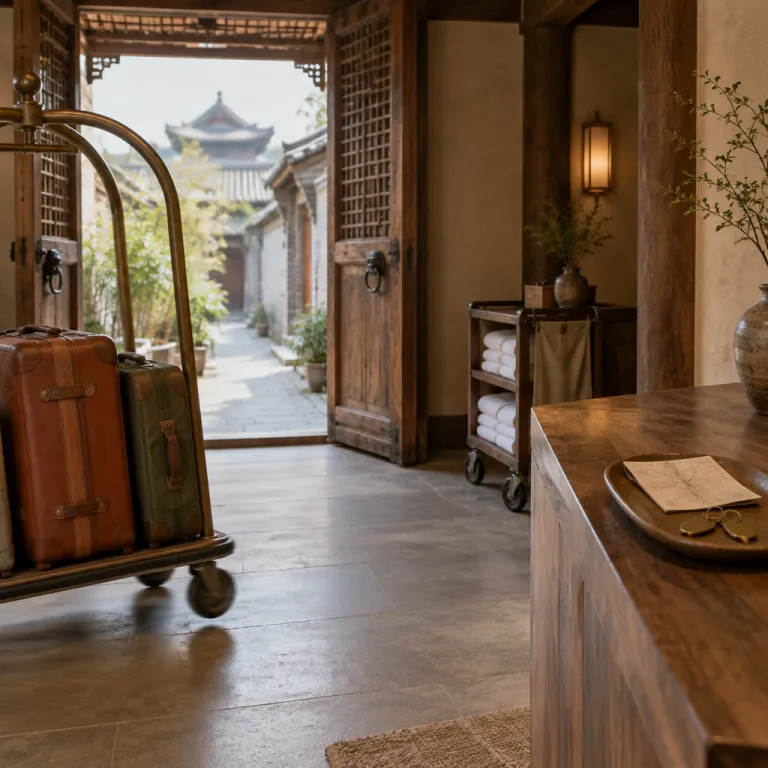
World tourism day, Beijing travel history and the luxury guest
World Tourism Day in Beijing feels less like a campaign and more like a mirror held up to seven centuries of travel history. In a capital that has hosted caravans from Central Asia, Jesuit astronomers and modern international visitors arriving on 240 hour visa free transit, tourism is woven into the city’s civic identity rather than added on top. For a solo traveler choosing a luxury hotel, understanding this long Beijing travel story changes how you read every lobby, every view and every concierge suggestion.
The phrase world tourism day Beijing travel history is not just a search term ; it is a question about how a city that once astonished Marco Polo now welcomes international visitors stepping off long haul flights from every continent. Beijing China recorded 22.91 million inbound visits in the first half of the current period, with 77.7 percent of these visitors entering China Beijing on visa free schemes, according to CGTN data, and that surge is reshaping how top properties think about service rhythms and language support. When you travel Beijing during this global tourism boom, you join a moving crowd of tourists and business travelers, yet the most rewarding stays still feel precise, quiet and almost private.
Luxury hotels in Beijing sit at the intersection of global tourism flows and very local cultural heritage. A well run hotel in this city understands that many visitors want to visit Beijing icons such as the Forbidden City, Tiananmen Square and the Great Wall, but they also want a guide to the dumpling stall in a hutong where the grandmother folds while the grandson translates. On World Tourism Day itself, some top properties now curate small scale experiences that connect guests to Beijing travel history, from private talks with Palace Museum researchers to twilight walks along the old city walls.
From imperial envoys to top global tourism hub
Long before Beijing became a top global tourism destination, it was already a city built to impress visiting envoys. The axial plan that runs from the Drum Tower through the Forbidden City to the Temple of Heaven was designed as a physical guide to imperial power, and today it doubles as one of the most meaningful tourist attractions in Beijing China. Walking this line with a thoughtful guide, then returning to a calm hotel suite, is one of the best ways to feel how world tourism day Beijing travel history lives in the streets rather than in speeches.
Modern tourism in China Beijing now layers visa free transit policies, multilingual signage and upgraded complaint handling systems over this deep architectural script. The Beijing Municipal Bureau of Culture and Tourism has pushed for new destination tracks, better international visitor services and more nuanced interpretation of cultural heritage, which you can feel when you follow the Central Axis trail from Bell Tower to Temple of Heaven. For a detailed route that links these attractions Beijing highlights with practical hotel advice, the piece on walking the Central Axis UNESCO trail is an essential companion.
On World Tourism Day, Tiananmen Square and the Palace Museum within the Forbidden City draw dense waves of tourists, yet the experience shifts dramatically depending on where you stay and when you go. Choose a hotel within a short taxi ride of the square, and you can visit at first light, when the flag raising ceremony gathers both locals and international visitors in a quiet, almost solemn crowd. Return later in the day to the same city landmarks, and you will see a different Beijing, one where tourism and daily life blend into a single, restless square of families, students and tour groups.
Great Wall choices, hutong solitude and where to stay
Every world tourism day Beijing travel history story eventually reaches the Great Wall, yet the way you approach it says everything about the kind of traveler you are. Badaling Great Wall remains the most popular section for first time visitors, with efficient transport links and extensive facilities, but it can feel like a global theme park of tourists at peak time. More independent travelers often choose quieter stretches, then return to a central hotel that offers strong concierge support rather than a packaged excursion from a generic travel agency.
For a solo explorer, the real luxury is the ability to move between top attractions and private moments of stillness in the same day. You might visit Beijing icons such as Badaling Great Wall in the morning, then spend the late afternoon on a hutong walk from Drum Tower to Ditan Park, ending in temple silence as described in the route on a two hour hutong walk. Returning to a well located hotel near the old city, you can step out again after dark to explore restaurants Beijing locals actually frequent, rather than the tourist oriented dining rooms that ring the main sights.
Properties around Wangfujing, Jinbao Street and the eastern Second Ring Road offer some of the best balances between access to tourist attractions and access to real neighborhoods. A stay at an elegant address such as the Sunworld Dynasty Hotel in Beijing Wangfujing, reviewed in depth in this hidden city adventures hotel guide, places you within easy reach of the Palace Museum while keeping you close to small noodle shops and late night tea houses. On World Tourism Day itself, that proximity lets you slip out to Tiananmen Square at dawn, retreat to your room when the crowds swell, then head north into the hutongs when the city exhales in the evening.
Universal Beijing, resorts and the future of cultural depth
Beijing’s tourism map now stretches from imperial palaces to roller coasters, and World Tourism Day throws that contrast into sharp relief. Universal Beijing Resort has quickly become one of the most popular attractions Beijing offers for families and younger international visitors, and its presence has pushed the city to refine transport links, signage and hospitality training. For luxury travelers, the question is not whether to go, but how to balance a day of cinematic spectacle with time spent in world heritage sites that anchor Beijing travel history.
High end properties near the eastern fringes of the city now market themselves as a new kind of Beijing resort, promising spa days after theme park nights and curated transfers between Universal Beijing and the historic core. Yet the most interesting hotels are those that use World Tourism Day as a prompt to talk about cultural heritage rather than just room categories, highlighting partnerships with Palace Museum conservators, hutong preservation projects or contemporary art spaces. When you travel Beijing during this season, ask your hotel what they are doing to support both tourists and the neighborhoods that host them, because the answers reveal whether they are building for volume or for depth.
In a city that has been welcoming travelers for centuries, the most thoughtful hotels act as translators between global tourism flows and very local stories. They help visitors navigate restaurants in Beijing China where menus are still handwritten, arrange guides who can explain why a courtyard doorway sits at a particular angle and suggest the right time of day to stand on Tiananmen Square without being swallowed by the crowd. On World Tourism Day, that quiet, precise guidance matters more than any slogan, turning a busy travel day into a personal chapter in the longer world tourism day Beijing travel history of this city.
FAQ
When is the best time of year to visit Beijing for cultural sightseeing ?
The most comfortable periods for cultural sightseeing in Beijing are spring and autumn, when daytime temperatures usually sit between 15 and 25 degrees Celsius. Air quality tends to be more stable, and you can spend longer at outdoor attractions such as the Great Wall or Tiananmen Square without fatigue. Around World Tourism Day, late September often offers clear skies, cooler evenings and thinner crowds than peak summer holidays.
Which Beijing neighborhoods are best for luxury hotels near major attractions ?
For easy access to the Forbidden City, Tiananmen Square and the Palace Museum, Wangfujing and the eastern side of the Second Ring Road are strong bases. Travelers who want quicker routes to the Central Business District and contemporary restaurants often choose Guomao or Sanlitun, trading a slightly longer ride to historic sites for more nightlife. If you prefer hutong atmosphere, look for high end properties near Shichahai or the Drum and Bell Towers, where you can walk to lakeside cafés and traditional courtyards.
How can solo travelers avoid crowds at the Great Wall and other popular sites ?
Timing and route choice matter more than any other factor when you want to avoid crowds. Visiting the Great Wall early in the morning on weekdays, or choosing less trafficked sections instead of Badaling, can dramatically change the experience. In the city, aim for first entry slots at the Palace Museum, and plan Tiananmen Square visits around sunrise or after dark, when tour groups are thinner.
Is it better to book Beijing experiences through a hotel concierge or a travel agency ?
High end hotel concierges in Beijing often have more up to date knowledge of restaurant openings, temporary exhibitions and traffic patterns than large travel agencies. They can tailor itineraries to your interests, arrange private guides and secure reservations at popular restaurants Beijing residents actually recommend. A specialist travel agency can still be useful for complex multi city itineraries across China, but for in city cultural experiences, a trusted concierge usually offers more flexibility.
How does the visa free transit policy affect short luxury stays in Beijing ?
The 240 hour visa free transit policy covering dozens of countries allows eligible travelers to spend up to six days in Beijing and certain other regions without applying for a full visa in advance. For luxury guests on long haul routes between Europe, North America and Asia Pacific, this makes a short stay in Beijing China far easier to plan. Many top hotels now design three to five night itineraries specifically around this window, combining world heritage sites, contemporary dining and time to decompress between flights.